

Dr. Zifei Liang
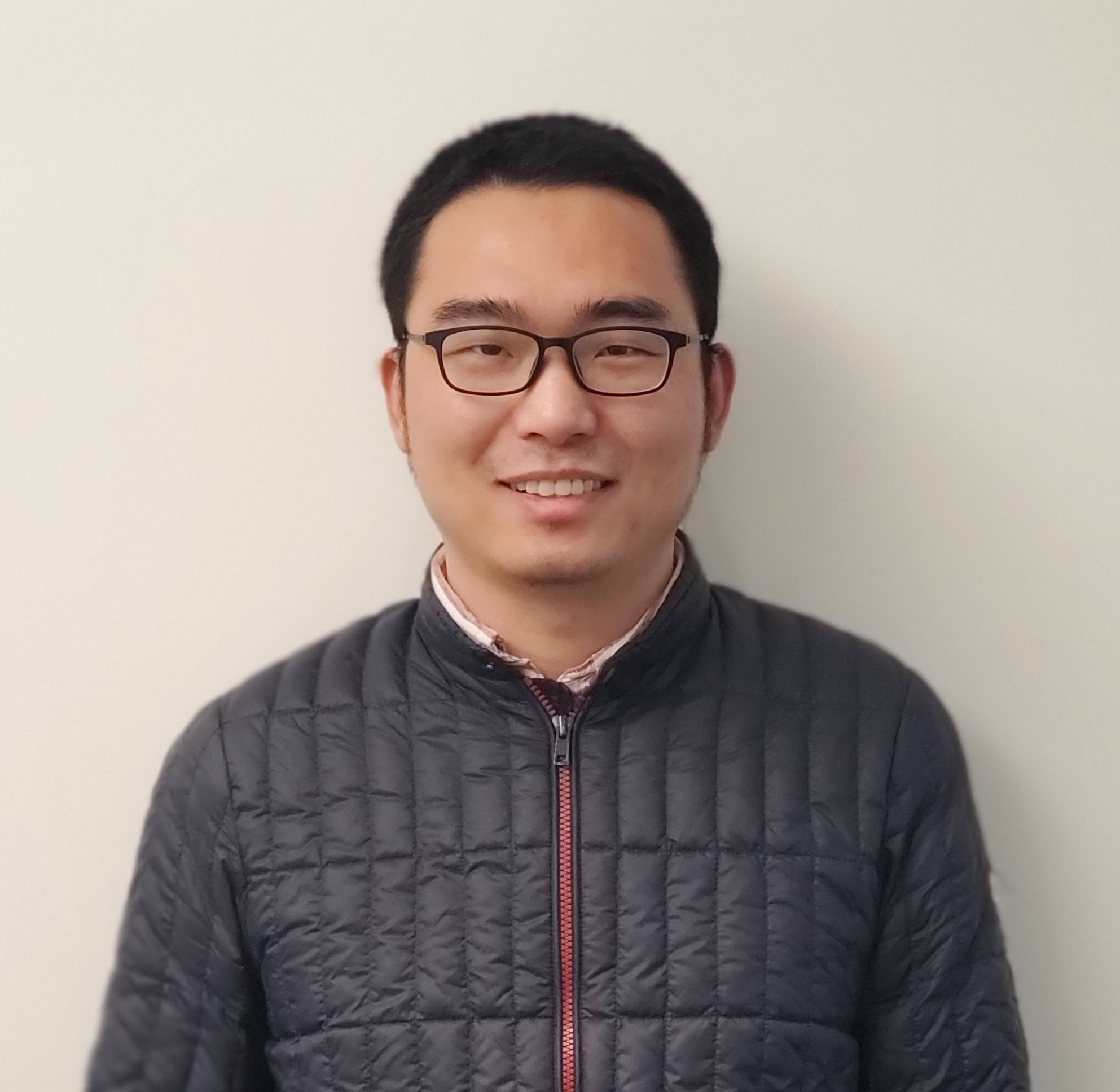
Dr.Zifei Liang
School of medicine
New York University
United States
Speech title:Connecting MRI and histology using deep learning on a voxel scale
Brief biography:
Dr.Zifei Liang currently is a Research Scientist in the Department of Radiology at New York University Langone Health Center. Since joining the group at NYU in 2017, his work has contributed to the development of next generation magnetic resonance imaging (MRI) techniques with applications on brain health and diseases. He obtained the Ph.D. in communication systems from Sichuan University in China, joint training by Johns Hopkins University (JHU), he also developing new methods to acquire and integrate multi-contrast MRI and histology to investigate microstructure contents. His recent work published in eLife benchmarked a novel imaging pipeline to mimic Virtual mouse brain histology from multi-contrast MRI via deep learning. The work is praised by the Journal as the first to compellingly show that MR-based virtual histology is feasible. Currently, He is working on extracting microstructure axonal information from diffusion MRI by viral tracer assistance, which is an extension of MR-histology.
Abstract:
1H MRI maps brain structure and function non-invasively through versatile contrasts that exploit inhomogeneity in tissue micro-environments. Inferring histopathological information from magnetic resonance imaging (MRI) findings, however, remains challenging due to absence of direct links between MRI signals and cellular structures. Here, we show that deep convolutional neural networks, developed using co-registered multi-contrast MRI and histological data of the mouse brain, can estimate histological information directly from MRI signals at each voxel. The results provide three-dimensional maps of mimicked target histology and enhanced sensitivity and specificity compared to conventional MRI markers. Furthermore, the relative contribution of each MRI contrast within the networks can be used to optimize multi-contrast MRI acquisition. Our method is a starting point for translation of MRI results into easy-to-understand virtual histology for neurobiologists and provide resources for validating novel MRI techniques.
Research Area: Medical and Biomedical Image Processing; Computer Vision; MRI; Machine learning.